A Mountain of Legends
Mount Kilimanjaro is not just a mountain; it's an icon. Standing at 5,895 meters (19,341 feet), it is the highest peak in Africa and the tallest free-standing mountain in the world. But there is more to Kili than its height.
Ecological Zones
Climbing Kilimanjaro is like walking from the equator to the poles. The journey takes you through five distinct ecological zones:
- Cultivation Zone: The lower slopes, rich with coffee and banana plantations.
- Rainforest Zone: Dense, lush forest teeming with monkeys and birdlife.
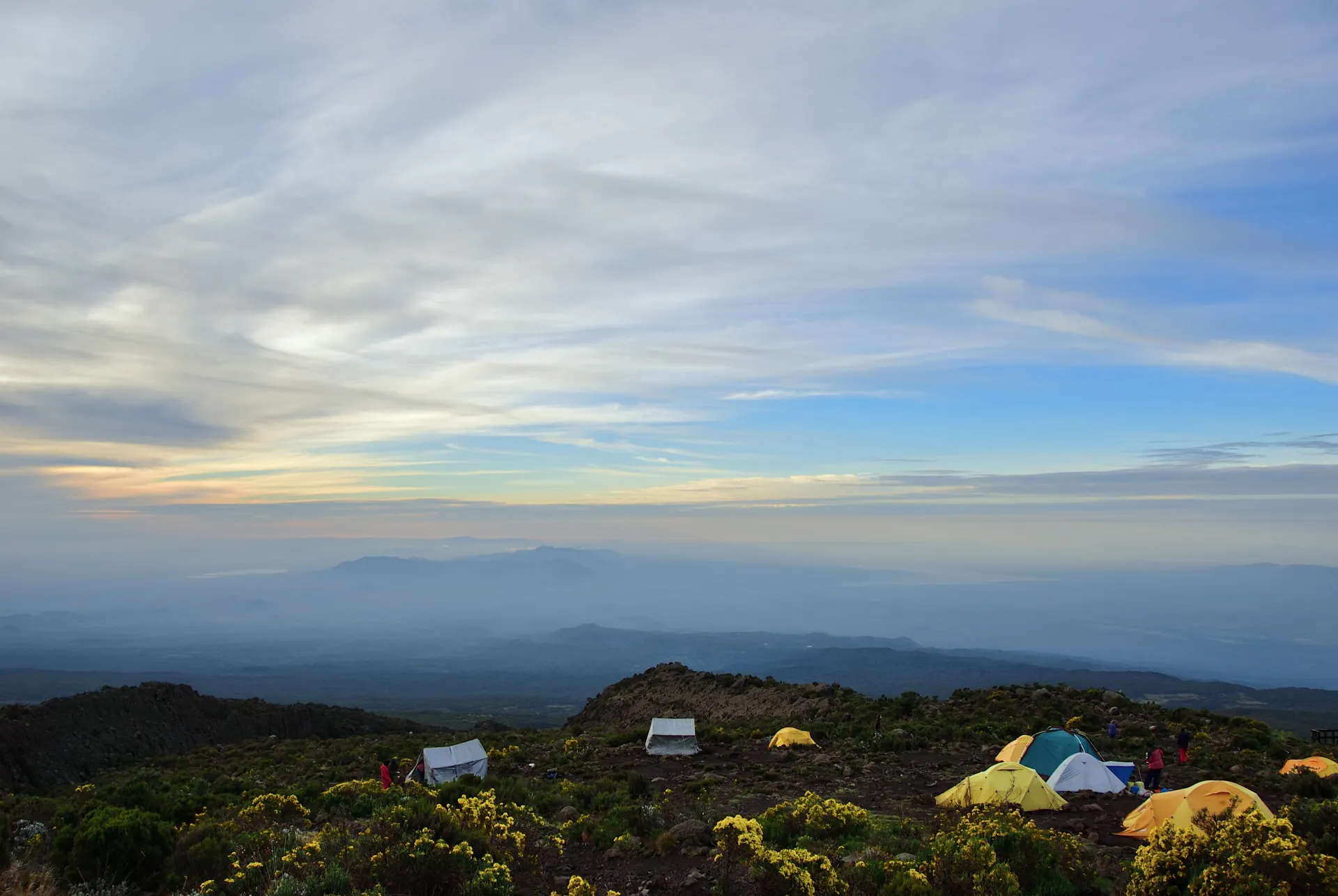
- Heather and Moorland: A surreal landscape of giant lobelias and senecios.
- Alpine Desert: A stark, rocky environment with extreme temperature fluctuations.
- Arctic Zone: The summit area, characterized by ice, snow, and glaciers.
Accessibility
One of the reasons Kilimanjaro is so popular is that it requires no technical climbing skills for most routes. It is a "walk-up" mountain, making it accessible to fit hikers. However, the altitude is a significant challenge, making proper acclimatization key to success.